
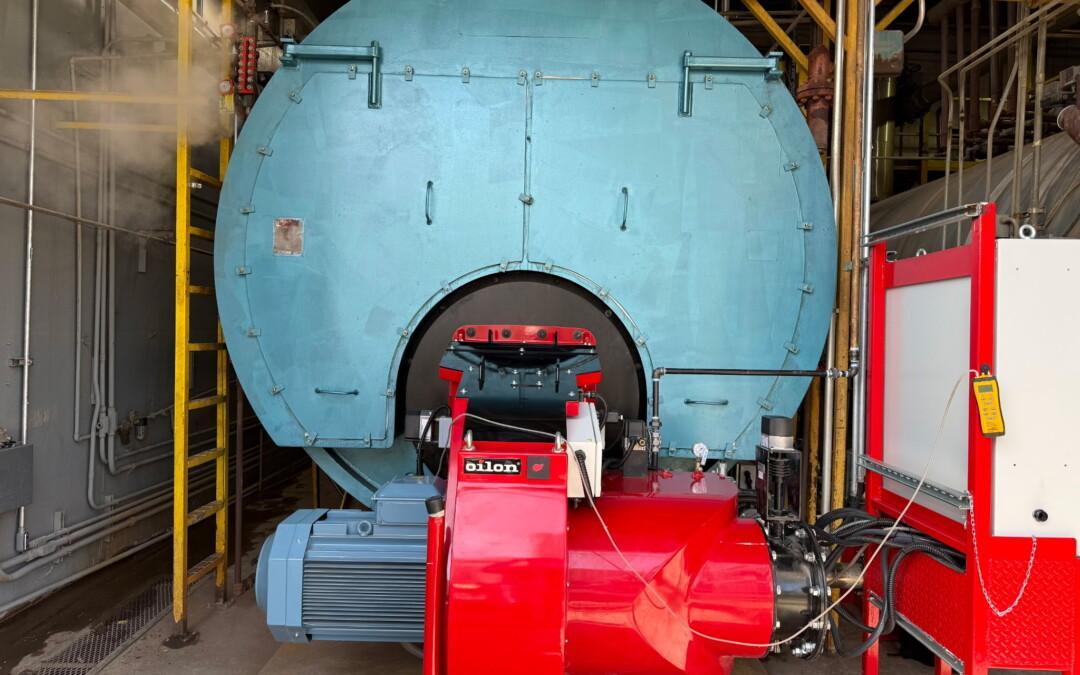
Oilon has offered reliable solutions for demanding fuels for decades, providing an excellent understanding of their behavior. Besides the more traditional alternatives (natural gas, light and heavy fuel oil), Oilon’s solutions are suitable for bio-oils, methane, synthetic gas, gas blends, and more.
Biofuels, such as biogas, provide an excellent way to showcase Oilon’s expertise. Biogas is mainly a mixture of methane and carbon dioxide. In addition to lowering emissions, biogas is often locally available as an industrial or agricultural side stream. There are challenges, though: fuel quality and availability can fluctuate, and at peak demand, a fuel with a greater heating value may be required. For maximum availability, a dual-fuel system is a strong contender.
In Brazil and Chile, biogas and biomethane are increasingly recognized as practical and efficient solutions for decarbonizing industrial heating processes. One of their key advantages is that they can be introduced without causing significant disruption to existing operations. This allows customers to reduce emissions while maintaining continuity in production, avoiding costly and complex system overhauls. As a result, biogas and biomethane are becoming strategic energy choices for industries seeking a gradual and economically viable transition toward lower-carbon energy sources.
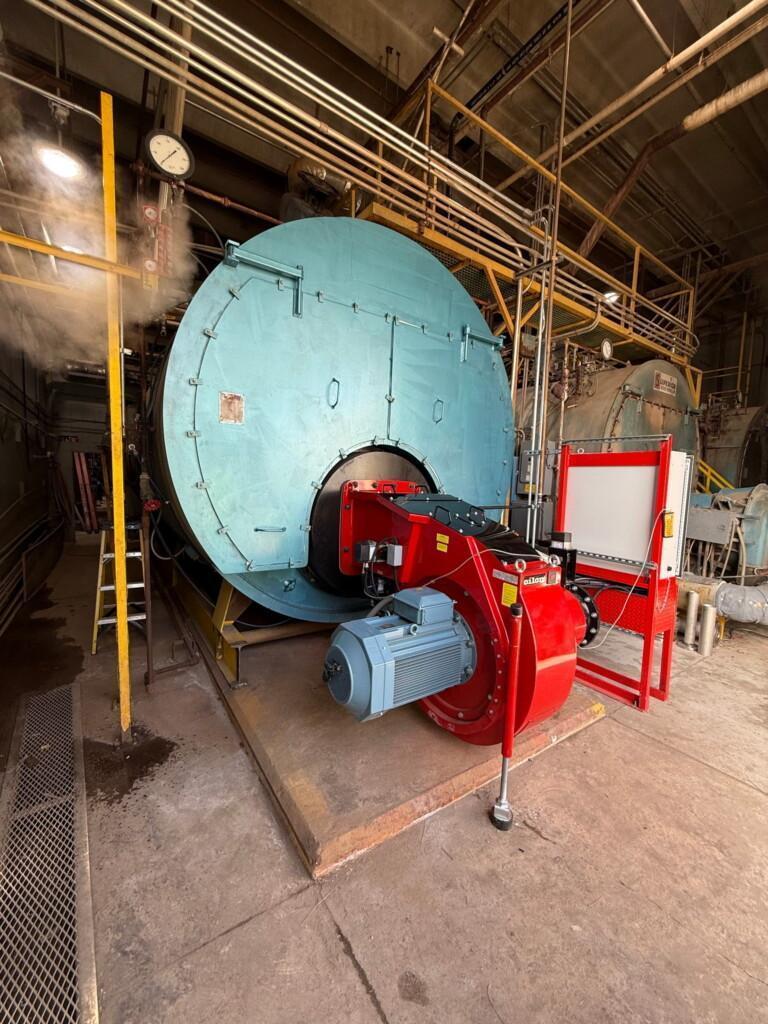
Similarly, in Brazil and Chile, Oilon’s local partners—including Weco, Veolia, and Dueik—have successfully implemented biogas projects. These installations typically involve gas and combination burners integrated into fire tube boilers, allowing industrial clients to effectively utilize locally produced biogas. The experience gained in these markets further highlights the reliability and adaptability of Oilon’s combustion solutions in real-world conditions.
In Dodge City, USA, a combination burner that burns natural gas and biogas has recently been installed. The fuel and its properties guide the burner selection.
The choice of fuel has a significant impact on emissions, and Oilon’s technology supports cleaner combustion with different fuels. In the future, the share of fossil fuels will decrease and the role of renewable and synthetic fuels will increase, but versatile combustion technology will remain important, especially in industry, where high temperatures and flexible energy production are needed.
Oilon has solid expertise in selecting the right fuels and combustion technology. Whatever the energy source, choosing an energy-efficient burner is easy with our expert salespeople.